
Do You Need an Elevation Certificate? Here’s What Homeowners Should Know Before Buying
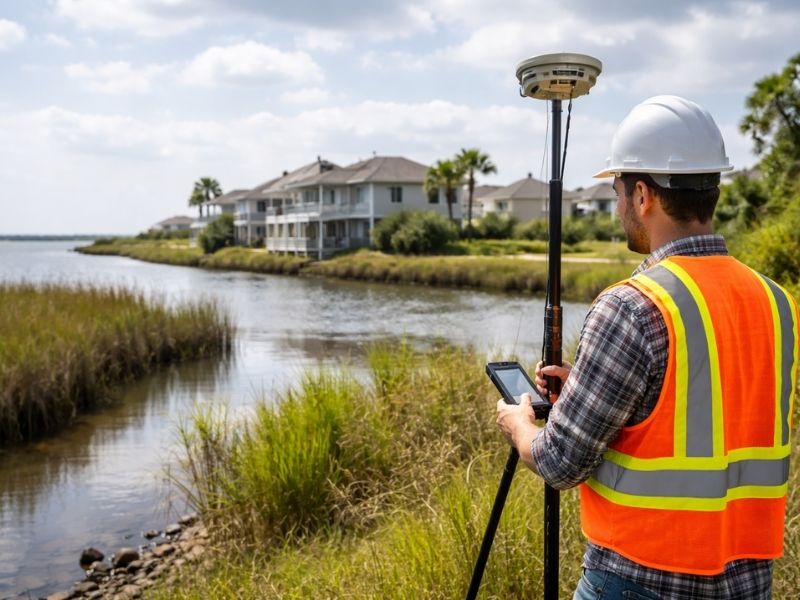
Most buyers ask about school districts, square footage, and roof age. Few ask about the elevation certificate. That’s a mistake that can cost thousands of dollars a year in flood insurance premiums, or worse, cause a lender to block the closing entirely. If the property you’re buying sits anywhere near a flood zone, this document matters more than most people realize.
What Is an Elevation Certificate?
An elevation certificate (EC) is an official FEMA document prepared by a licensed land surveyor. It records the elevation of a building’s lowest floor relative to the Base Flood Elevation (BFE) for that property. The BFE is the flood height expected during a 1-percent-annual-chance flood event, commonly called a 100-year flood.
The certificate captures specific details: the property’s flood zone designation, the height of the lowest floor, foundation type, and whether a basement or enclosure is present. Insurance companies use this data when calculating flood insurance premiums under the National Flood Insurance Program (NFIP).
Who Actually Needs One
Not every homeowner needs an elevation certificate. But several situations make one either required or worth getting.
You’ll likely need one if:
- The property is in a Special Flood Hazard Area (SFHA), typically Zone A or Zone V on FEMA’s Flood Insurance Rate Map
- A federally backed lender requires flood insurance as a condition of the mortgage
- The home was built new or substantially improved within a mapped flood zone, since most communities require an EC before issuing a certificate of occupancy in these cases
- You want to apply for a Letter of Map Amendment (LOMA) to challenge the property’s flood zone designation
You may want one even if it’s not required. Under FEMA’s current Risk Rating 2.0 pricing system, an EC is no longer mandatory just to purchase an NFIP policy. But submitting one to your insurance agent can document that your home sits above the BFE, which may reduce your premium.
How an Elevation Certificate Can Lower Your Flood Insurance Bill
This is where the math gets interesting.
FEMA warns that just one inch of floodwater can cause $25,000 in damage to a home. The average NFIP claim payment between 2020 and 2024 was more than $82,000. Yet many homeowners overpay on flood insurance simply because their insurer doesn’t have current elevation data on file.
If a home’s lowest floor sits above the BFE, the insurer revises the risk calculation downward. A property showing 1.25 feet of freeboard above BFE can qualify for roughly a 9.85% discount on the premium, according to FEMA data. For homeowners paying $1,200 a year, that kind of reduction adds up fast.
The national average cost for an elevation certificate runs about $600, with a typical range of $400 to $900 for residential properties. A certificate that saves $500 or more per year pays for itself within the first 12 months.
What the Certificate Actually Measures
A surveyor fills out the EC form using field measurements and FEMA flood map data. The key pieces of information include:
- The flood zone and BFE for the property
- The elevation of the lowest floor, including any attached garage, crawlspace, or enclosure
- The type of foundation (slab, crawlspace, basement, or elevated)
- Whether flood openings are present and how many
- The elevation of any machinery or equipment serving the building
Each of these factors feeds directly into how an insurer or local floodplain manager evaluates the property’s risk.
Basements are handled separately. They are measured below the first floor and treated as an independent risk indicator. If the property has one, it gets noted on the certificate.
When the Certificate Is Required for New Construction
Developers and builders working in or near flood zones face stricter requirements. Any new construction or substantial improvement within a mapped SFHA almost always requires a pre-construction elevation certificate before permits are issued. A finished construction elevation certificate is then required again before the certificate of occupancy is granted.
A substantial improvement is generally defined as any repair or renovation where the cost equals or exceeds 50% of the structure’s pre-improvement market value. That threshold catches more projects than most developers expect, so checking flood zone status early in the due diligence process saves time.
How Long an Elevation Certificate Is Valid
There is no expiration date on an elevation certificate. Once completed by a licensed surveyor, it remains valid unless the property undergoes substantial changes or FEMA updates the flood maps for the area.
If FEMA issues a new Flood Insurance Rate Map (FIRM) for your community, the old certificate may no longer reflect current conditions. Getting an updated Elevation Certificate after a map revision can protect against premium increases that otherwise kick in automatically when flood zone designations change.
One more thing to check: communities can earn discounts of up to 45% on NFIP premiums through FEMA’s Community Rating System (CRS) program. These community-wide discounts apply to all policyholders in participating communities, independent of any individual Elevation Certificate. Knowing whether the municipality participates in CRS is worth a quick call to the local floodplain manager before buying.
How to Get One
Three options exist for obtaining an elevation certificate:
First, check if one already exists. Many properties built after the local FIRM was published have an Elevation Certificate on file with the local floodplain administrator. It’s free to request and can save the cost of ordering a new one.
Second, contact your local floodplain manager. For properties in flood zones, this office often maintains records and can direct you to existing certificates.
Third, hire a licensed land surveyor. If no existing Elevation Certificate is on file, a surveyor will visit the property, take the required measurements, and complete the FEMA form. Turnaround time typically runs three to seven business days for a standard residential property.
Frequently Asked Questions
What is an elevation certificate and what is it used for?
An elevation certificate is a FEMA document completed by a licensed land surveyor. It records a building’s elevation relative to the Base Flood Elevation and is used to determine flood insurance premiums, verify compliance with local floodplain regulations, and support applications for flood map amendments.
Is an elevation certificate required to buy flood insurance?
Under FEMA’s current NFIP pricing system (Risk Rating 2.0), an elevation certificate is no longer required to purchase a flood insurance policy. However, submitting one may lower your premium if the data shows the home sits above the Base Flood Elevation.
How much does an elevation certificate cost?
The national average is around $600, with most residential properties falling between $400 and $900. Commercial properties, remote parcels, and difficult-access sites typically cost more.
How long is an elevation certificate good for?
There is no expiration date. The certificate remains valid unless the property is substantially improved or FEMA remaps the flood zone. After a map revision, getting an updated certificate helps ensure your insurance rate reflects current conditions.
Who prepares an elevation certificate?
Only a licensed land surveyor, engineer, or architect authorized by law to certify elevation information can complete an official elevation certificate. It cannot be self-prepared by the property owner.
