
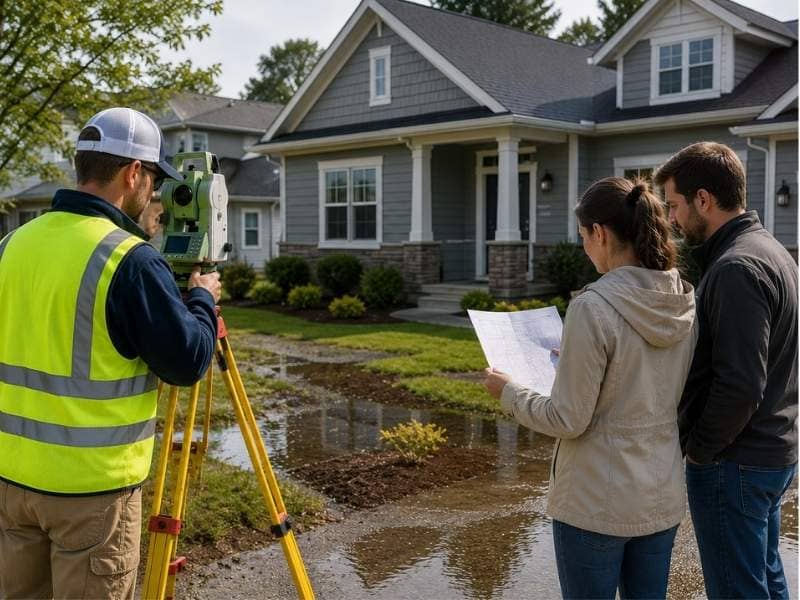
A heavy storm rolls through. Water sits in the yard longer than usual. That old flood elevation certificate in the drawer starts to matter again. Most homeowners don’t think about this paper until something forces the question. Then it becomes the first thing people look for.
A flood elevation certificate shows how high a home sits compared to the flood risk level for its area. Insurance companies use it. Lenders ask for it. Once the weather turns rough, homeowners want to know if theirs is still accurate.
How Weather Events Can Lead to Questions About Elevation Records
Heavy rain and storms don’t make a certificate wrong. But they often push homeowners to check it anyway. Water pools where it never used to, and soil shifts after a hard freeze and thaw.
A completed certificate doesn’t expire on its own. It only needs a fresh look if the building itself changed.
Insurance renewal time often lines up with storm season, so homeowners may face a rising bill and an aging certificate at the same time. FEMA no longer requires a certificate to buy flood insurance. But turning one in can still lower the premium if the numbers beat what FEMA already has on file.
Why Home Buyers Often Ask About a Flood Elevation Certificate
Buyers ask for this paper to see how a home compares to the base flood elevation. That number shapes insurance costs and their decision before closing. It comes up early, right next to the survey and the title work.
A clear, current certificate answers a lot of questions before anyone has to ask. Sellers who keep one ready skip a common holdup in a flood zone sale. Instead of waiting on a request, they hand over a copy.
What Property Changes Should Be Shared With a Surveyor
Several common upgrades can shift a property’s elevation numbers. It helps to flag them to a surveyor:
- Raising a structure
- Adding a garage or new slab
- Building a retaining wall
- Regrading a yard or changing how water drains across the lot
None of these feel like a big deal at the time. But each one can change how a structure relates to the flood elevation around it. Fixing a wrong flood zone label later needs data from a licensed professional.
A quick call to a surveyor usually settles whether the old certificate still holds up.
How Keeping Records Can Make Future Reviews Easier
Most homeowners save tax papers for years. Survey records deserve that same habit, yet they often get lost or buried somewhere.
A simple folder, paper or digital, holds past surveys, permits and flood papers in one place. That turns a future review into a quick task. Some communities must keep elevation certificates on file for new buildings and major rebuilds, especially those in FEMA’s Community Rating System.
This habit pays off most during stressful times, like a home sale or an insurance dispute. Nobody wants to hunt for an old permit while a closing date creeps closer.
When a Missing Flood Elevation Certificate Can Cause Delays
A missing certificate rarely causes a crisis on its own. But it almost always causes a wait. Lenders and title companies often need a copy before they move forward, and that request tends to land with a tight deadline.
Once that request comes in, homeowners call surveyors, dig through old emails and try to track down who pulled permits years back. Each call or email adds another day to a deadline that’s already running.
Keep a copy somewhere easy to find. That request gets answered the same day it arrives instead of starting a week of phone tag.
Frequently Asked Questions
What should I do if I cannot find my flood elevation certificate?
Start with the surveyor who made it. The local floodplain manager or planning office sometimes holds a copy too. If neither has one, a new survey may be the fastest way to get current numbers.
Do home buyers ask to see a flood elevation certificate?
Yes, and often early on. Buyers want to know flood risk and insurance costs, so this paper tends to come up next to the survey and the title work.
Should I keep old surveys and flood records?
Yes. Keeping these papers together in one place saves time during sales, insurance reviews or any future question about a home’s past.
Can changes to my property affect elevation records?
Yes. Many ordinary upgrades shift these numbers without anyone realizing it. Telling a surveyor about a project, even a small one, keeps the certificate trustworthy.
What happens if I do not have a copy of my flood elevation certificate?
A missing certificate doesn’t stop a deal outright, but it adds time to underwriting, title work or loan approval until a copy surfaces.